
FCL vs LCL shipping from India to Africa: which to choose
FCL vs LCL is the first shipping decision you make after the quote. FCL means Full Container Load: one container carries only your goods. LCL means Less than Container Load: your goods share a container with other shippers’ goods. This guide explains how the two compare for importers of building materials in Africa, so you can choose before you place the order.
Key facts
- What it is: FCL means Full Container Load: one container carries only your goods. LCL means Less than Container Load: your goods share a container with other shippers.
- Why it matters: The choice changes the cost per unit, how often the cargo is handled and the risk of damage and delay.
- Rule of thumb: Choose FCL for larger orders and for heavy or fragile goods. Choose LCL for small orders and samples.
- How we help: Send us your quantity. We tell you what is possible, and we quote the container for FCL orders.
FCL vs LCL in one table
| FCL (full container) | LCL (shared container) | |
|---|---|---|
| Who uses the container | You alone | You and other shippers |
| Charged by | The container, whatever fills it | The volume or weight of your goods |
| Handling | Loaded once, sealed at origin, opened at destination | Goods are consolidated at a depot and separated at another depot |
| Risk of damage and delay | Lower, because the cargo is handled less | Higher, because it is handled more and waits for the container to fill |
| Best for | Larger orders, heavy or fragile goods | Small orders and samples |
When FCL makes sense
- Your order fills a good part of a container. The cost per unit is usually lower, because you pay for the container rather than for each cubic metre.
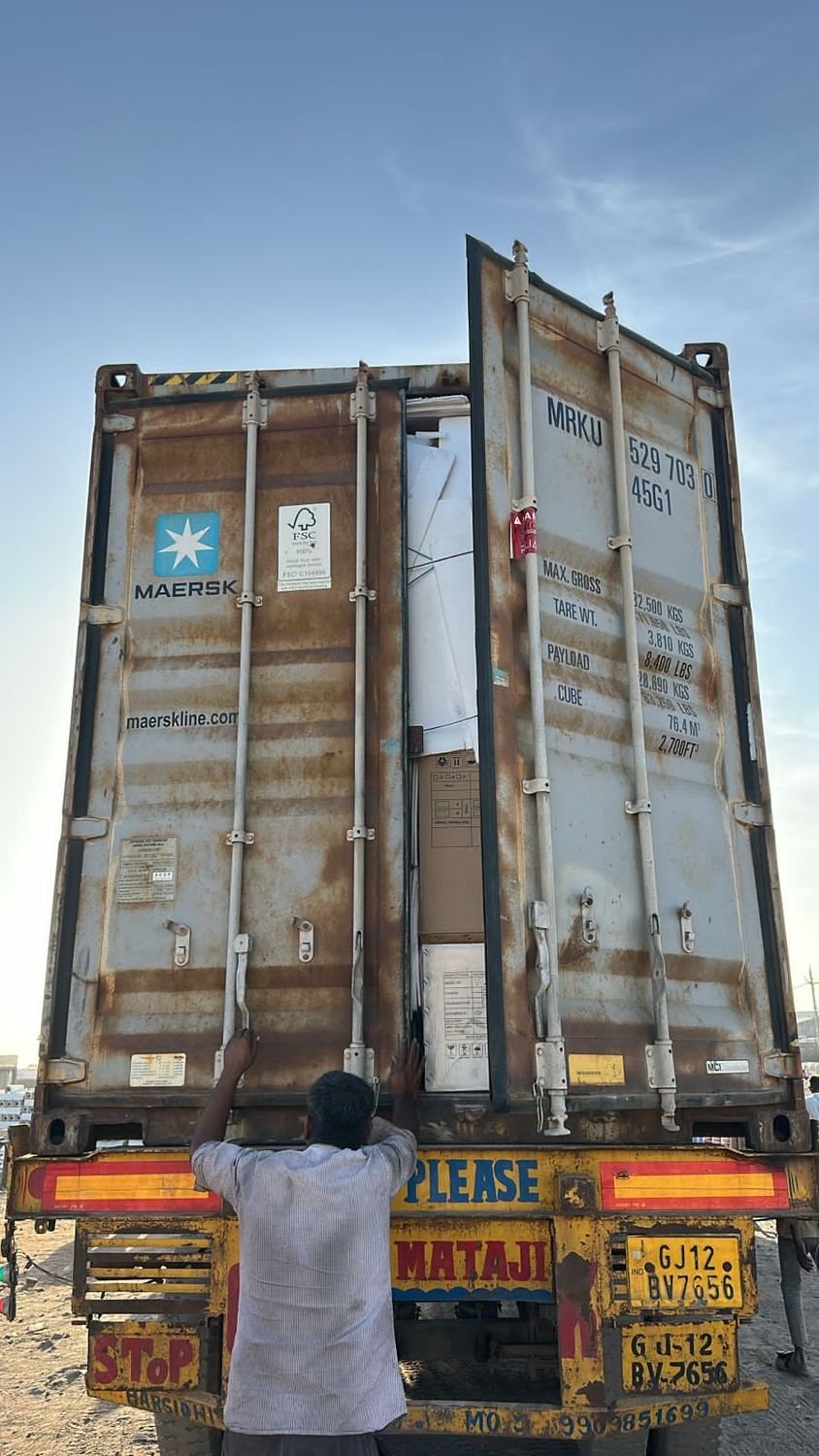
- The goods are heavy or fragile. Sanitaryware, tiles and plywood benefit from being loaded once and sealed, as in our loading photos.
- You need photos, container and seal numbers from the loading day.
When LCL makes sense
- You are ordering a small quantity or a sample shipment.
- You do not need the goods in a hurry, because the consolidator waits to fill the container.
- You accept more handling at both ends.
FCL vs LCL for building materials
Building materials are heavy, bulky or breakable. Tiles and steel are dense, so a container is quickly full by weight, and a full container is cheaper per tonne than shared space. For small trial orders, ask for a quote on both and compare the cost per unit and the total time. A mixed FCL, where you combine several products in one container, often gives a lower freight cost per product than shipping each separately. See the mixed container guide.
How to decide
- Calculate the volume and weight of your order. See how to calculate CBM.
- Compare with the container sizes.
- If your order fills most of a container, ask for FCL. If it is small, ask us what is possible for your quantity.
- Check which certificate your country needs. In Tanzania and Kenya it is issued for each shipment: see PVoC for Tanzania and Kenya PVoC.
Frequently asked questions
What does FCL mean in shipping?
FCL means Full Container Load. One container carries only your goods, and you pay for the container whatever fills it.
What does LCL mean in shipping?
LCL means Less than Container Load. Your goods share a container with other shippers, and you pay for the volume or weight of your goods.
Is FCL cheaper than LCL?
For larger orders, FCL usually costs less per unit, because you pay for the container rather than for each cubic metre. For small orders, LCL can cost less in total.
Is LCL riskier for building materials?
It carries more risk of damage and delay, because the cargo is handled more and waits for the container to fill. Heavy and fragile goods such as tiles, sanitaryware and plywood benefit from being loaded once and sealed.
When should I choose LCL?
Choose LCL for a small quantity or a sample shipment, when you do not need the goods in a hurry and you accept more handling at both ends.
Get a quote for your container
Tell us the product, size, quantity and destination port. A named export manager replies with a specification, price and lead time. Request a quote, download the free import checklist or message us on WhatsApp.
Planning an order? Ask for a quote.
Tell us the product, quantity and destination. A named export manager replies with specifications, price and the import documents for your country.
Prefer to chat? Message us on WhatsApp.