
Rebar vs TMT bars: what is the difference?
Rebar is the general name for any steel bar that reinforces concrete. TMT bars are one type of rebar. They are ribbed bars made by a thermo-mechanical treatment that gives a hard outer layer and a softer, tougher core. Most new construction in India and in many export markets uses TMT bars.
Key facts
- What it is: Rebar means reinforcing bar. TMT means thermo-mechanically treated. Every TMT bar is rebar, but not every rebar is a TMT bar.
- Why it matters: The type of bar decides strength, ductility and how well the steel grips the concrete.
- How we help: We export TMT bars from Mumbai, India, and a mill test certificate accompanies each lot.
- Standard: IS 1786 from the Bureau of Indian Standards covers high strength deformed steel bars, including TMT grades such as Fe 500D and Fe 550D.
What rebar means
Concrete is strong when it is squeezed and weak when it is pulled. Steel bars inside the concrete take the pulling forces. Builders call these bars rebar, reinforcement bars or reinforcing steel. The word describes the job, not the way the bar is made.
What makes a bar a TMT bar
A TMT bar is made in three steps:
- The steel is rolled hot into a ribbed bar.
- The bar is quenched with water, so the outer surface cools fast and hardens.
- The hot core then warms the surface again as the bar cools in air. This self-tempering step makes the surface tough, not brittle.
The result is a bar with a strong outer layer and a ductile core. Ductile steel bends before it breaks, which matters when a building is under stress.
Rebar types compared
| Type | Surface | Strength and ductility | Bond with concrete | Where you see it |
|---|---|---|---|---|
| Plain round bar | Smooth | Lower strength | Weaker grip | Stirrups, light work and older buildings |
| Cold-twisted deformed bar | Ribbed, twisted | Higher strength, lower ductility | Good grip | Older practice, now less common in new work |
| TMT bar | Ribbed | High strength with good ductility | Good grip | Slabs, beams, columns, foundations, bridges |
Why most projects choose TMT bars
- Strength with ductility. The grades with a D, such as Fe 500D, are made for ductility.
- Grip. The ribs lock the bar into the concrete.
- Less steel for the same load. Higher strength can allow lighter reinforcement. Your engineer decides this, not the supplier.
- Corrosion options. Corrosion-resistant TMT bars exist for coastal and humid sites.
How to choose a grade
The number in a grade, such as Fe 500D, is the minimum yield strength in megapascals. The letter D means higher ductility. Your engineer names the grade in the design. Our guide to Fe 500D vs Fe 550D explains the difference. We export Fe 500D and Fe 550D bars.
What to check before you buy
- Grade and standard. Confirm the grade and the standard your project names. Other markets also use standards such as BS 4449 or ASTM A615, so state yours in the order.
- Mill test certificate. Ask for the certificate for each lot, and check that it matches the grade and size ordered.
- Diameter and length. Agree them in the quote, with the allowed tolerance.
- Ribs and surface. Ribs should be clear and even, and the surface free of cracks and heavy rust.
- Bundle tags. Each bundle should show the grade, size and heat or batch number.
Our guide on what to check before buying from an Indian exporter lists more questions. Tie the bars with the right wire: see black annealed vs galvanised binding wire.
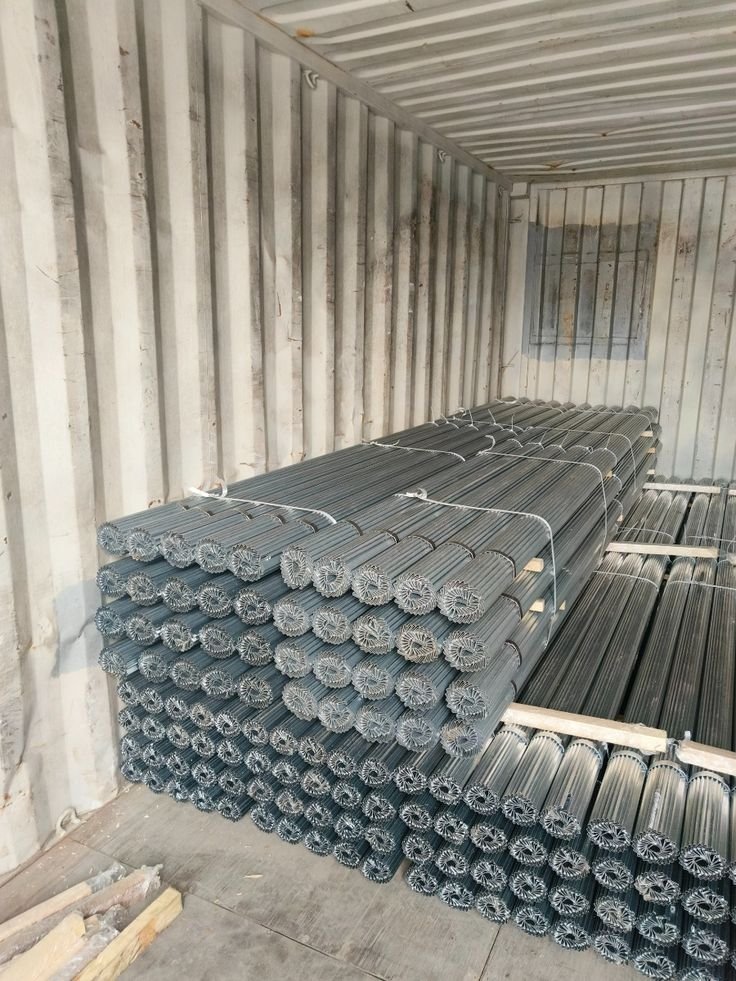
Shipping TMT bars
TMT bars are long and heavy, so weight and length decide the container. See container sizes and how to calculate CBM. You can ship bars with wire and plywood in one load: see mixed containers. For terms, read FOB, CFR and CIF. See all TMT bars that we export from India.
Frequently asked questions
Is rebar the same as TMT bar?
No. Rebar is the general term for any steel bar that reinforces concrete. A TMT bar is a type of rebar made by a thermo-mechanical treatment.
Is TMT better than ordinary rebar?
For most building work, yes. TMT bars combine high strength with good ductility and grip. Your engineer decides which bar a design needs.
What does Fe 500D mean?
Fe means iron, 500 is the minimum yield strength in megapascals, and D means higher ductility. See our guide on Fe 500D vs Fe 550D.
Can TMT bars be welded?
It depends on the chemistry of the steel and on the grade. Ask the factory, and confirm the answer with your engineer before you plan welded joints.
Which standard covers TMT bars?
In India, IS 1786 covers high strength deformed steel bars. Other markets name other standards, so check the one your project uses.
Get a quote
Tell us the product, size, quantity and destination port. A named export manager replies with a specification, price and lead time. Request a quote, download the free import checklist or message us on WhatsApp.
Planning an order? Ask for a quote.
Tell us the product, quantity and destination. A named export manager replies with specifications, price and the import documents for your country.
Prefer to chat? Message us on WhatsApp.